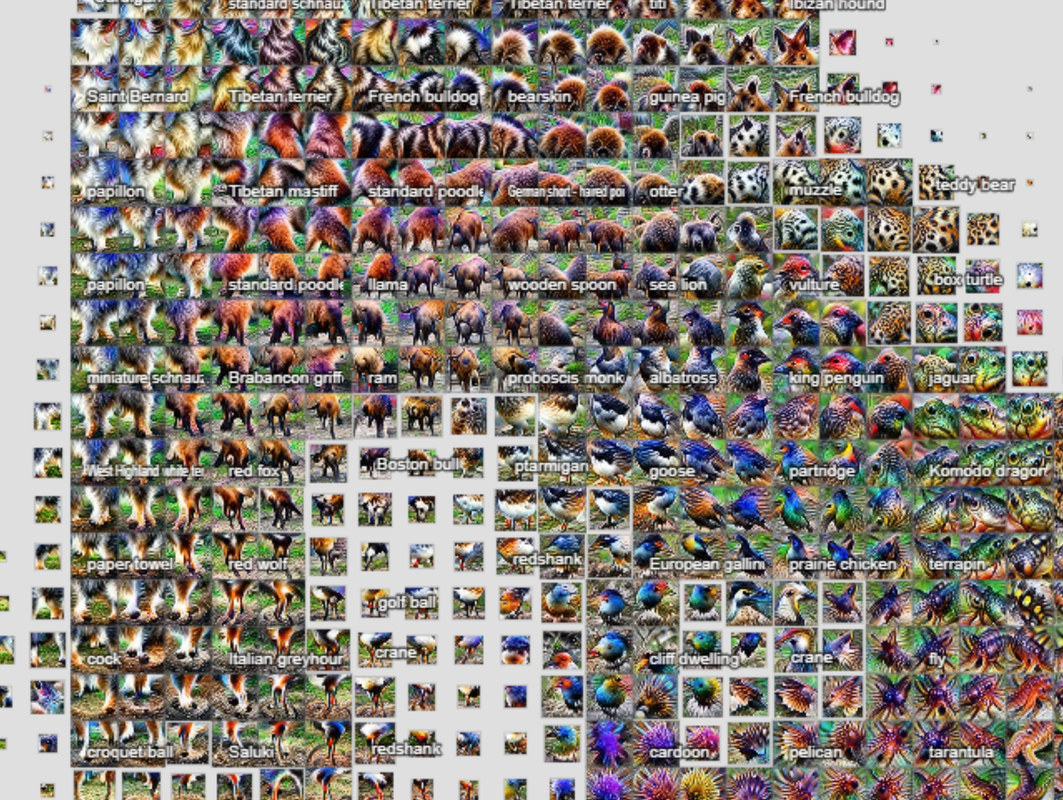
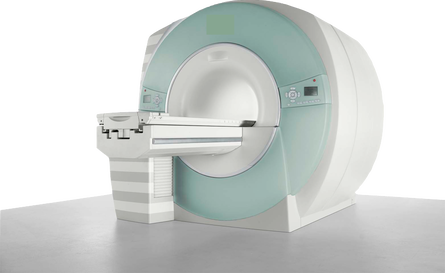
Here is a trail in quest of the answer. If you have anything to add, please use the “Comment” function.Read the entire email trail
Reply from Rhodri Cusack
I don’t know, but here are some speculations:
- Cooling: the brain uses a very substantial portion of our energy (20%?). This will ultimately be all turned into heat. It sounds like white matter uses much less energy than grey matter (<0.5% per synapse), so maybe it makes sense to have the grey matter as a sheet on the outside
- Connectivity: perhaps there are just so many connections needed for each piece of grey matter, this is the only way to fit in the wiring?
Reply from Jody Culham
Wiring. A thin sheet allows you to have lots of wiring to different areas. See attached figures. A thin, folded cortex allows lots of wiring across gyri (Van Essen’s theory of compact wiring, which explains mirror maps in retinotopy). Across a wide range of brain sizes, cortex remains a constant thickness. This is thought to be because if it gets any thicker, neuron density drops because the white matter takes up too much space. Also if the cortex is too thick, it’s hard to fold (e.g., folding paper vs. cardboard)… that’s why species like dolphins and whales that have more convoluted cortices have thinner cortices and lower neuronal density than humans. I can lend you the book these figures are from if you’re interested.

Also, here is one of my favorite papers (which I used to do in Neuro 500). It’s from Jon Kaas and addresses why we don’t just have one large V1 instead of the bazillion little areas. Argument is related to the above… many areas gives you lots of flexibility in wiring.
One related question I don’t have a ready answer for is why the spinal cord is inverted compared to the cortex — spinal gray matter inside, white matter outside.

Reply from Ravi Menon
Bingo, Jody mentioned the paper by Kaas I was trying to explain to you.
The spinal cord is inverted for obvious reasons. It’s the most compact way to get the wiring to the peripheral limbs and torso. Otherwise the wiring would have to go through the grey matter, which is not efficient from a packing perspective, or from an interneuron communication perspective.
TV
I don’t think cooling is the factor. Action potentials are what costs the most energy. These occur in the white matter as well.
But Ravi would know for sure.
RM
Grey matter has 3-4 times the metabolic rate of white matter, as is evident from FDG-PET. So indeed, having the grey matter on the outside likely helps. White matter is very energy efficient in terms of action potential propagation (the benefit of myelin), while the trillions of synapses in grey matter are very energy hungry.
BTW, there is a paper by Dimitry Yablonskiy in PNAS that suggests that grey matter has a marginally higher temperature than white matter and that this goes up with a cognitive task.
I just looked it up and he has a more recent paper too. So Rhodri’s idea about cooling isn’t so silly.
References
How the body controls brain temperature: the temperature shielding effect of cerebral blood flow.
Coupling between changes in human brain temperature and oxidative metabolism during prolonged visual stimulation.
TV
But it might not be cooling that is the important factor. As Ravi’s article suggests blood flow might be shielding it from too much cold.
But if temperature was the important factor, be it too much heat or much cold, then why have such deep sulci?
But maybe blood flow is part of the answer. Blood enters and leaves the brain from the surface. Perhaps there are limits to the optimal length of a capillary bed.
Ravi, I seem to remember that you have a neat picture of the capillary bed around cortical column. You still have that?
As Jody’s picture points out it is remarkable that the cortex as a constant depth of a millimeter or so spanning species from the rats to a whale.
Reply from Adrian Owen
My answer would be ‘how much do you need’? Assuming that what we (well, most of us) have is enough, or at least the right amount, and that you want to allow maximal connectivity between all this gray matter, then a thin ribbon on a densely folded surface is a very efficient way of achieving that. By a ‘big cube or sphere’ I assume you mean a solid volume of gray matter. The problem with that is where do you put all the stuff that connects it all together? And even if you make some room for it, how do you make sure you can connect it ALL together – I think pushing it out towards the surface is the best solution. And to compensate for the loss of (gray matter) volume, fold it up a lot!
RM

Heat transfer from blood is the main regulator it seems, and there is 3-4 times as much blood flow in GM vs WM, commensurate with the glucose consumption. So that fits nicely.
It’s not clear that capillary length is a limiting factor. After all, we only drop the oxygenation from 95% to 65% from one end of a capillary to the other. There’s another 65% to go. The reason the pre capillary sphincter is not at 100% oxygenation is that there is some oxygen exchange even at the penetrating arteriole level.

Tutis, the picture I think you are thinking of is a modification I made from Duvernoy. The link to two slides showing the view from the “top” and a sulcus is attached.
TV
But the brain is very efficient as is the rest of the body. As Rhodri said it produces about 20% of the body’s basal metabolic rate but that amount to only 10 to 15 watts of heat.[\EXPAND]
The lab has been awarded five years of funding from NSERC to investigate how auditory and visual memories are stored in the brain. Short-term memory is the scratchpad for our thoughts, and is essential for almost all cognitive operations. This project will develop new neuroimaging methods that will characterize the rich representations used to encode memories in the brain, understand how they change in time, and how they differ between people.
In a blog entry this week, Daniel Bor discusses why weak neuroimaging papers are still published, and what can be done about it. Be sure to check out the comments, which include contributions from many insightful people.
If you would like to volunteer to work in the lab, please write a short email to us at cusacklab [at] gmail.com with a few sentences saying:
- when you would be available
- what you would like to do
- what you would like to get out of it